Forgetting Stuff Doesn't Mean Your Brain Is Broken — It Means It's Working
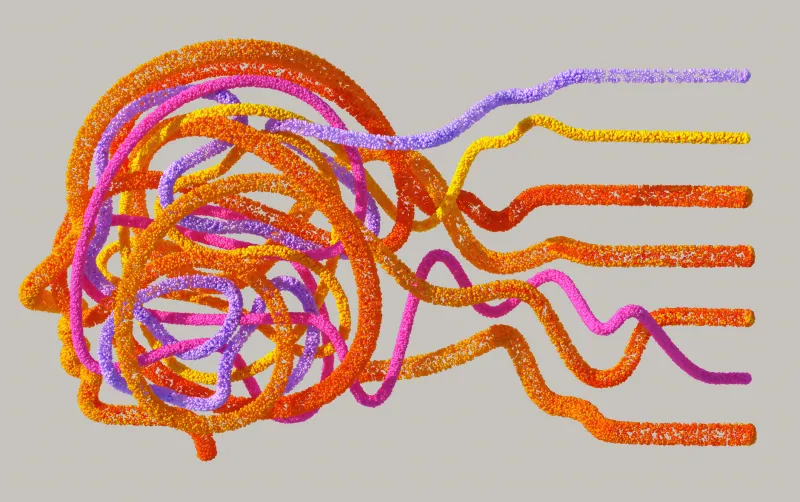
We've all been there. You walk into a room and have absolutely no idea why. You blank on a coworker's name mid-introduction. You swear you knew the capital of Vermont last week and now it's just... gone. (It's Montpelier, by the way. You're welcome.)
The knee-jerk reaction is to panic a little. Am I losing it? Is this early dementia? Should I be doing more crossword puzzles?
Here's the thing: the idea that a good memory means remembering everything is one of the most persistent myths about how the brain actually works. Your brain isn't a hard drive. It's not supposed to store every file you've ever encountered. And the sooner we ditch that comparison, the better we'll understand what's actually going on upstairs.
The Computer Brain Myth Is Doing Real Damage
For decades, pop science has sold us the idea that our brains are biological computers — input goes in, gets stored, and can be retrieved on demand. Lose data? System error. Something must be wrong.
But neuroscientists have been pushing back on this for years. The brain doesn't work like a filing cabinet where memories sit in labeled folders waiting to be pulled. Memory is a reconstructive process. Every time you remember something, you're essentially rebuilding it from scratch using fragments, context clues, emotional cues, and sometimes a healthy dose of imagination filling in the gaps.
That's why eyewitness testimony is notoriously unreliable. That's why you and your sibling remember your childhood vacations completely differently. And that's why, yes, you genuinely cannot recall what you ate for breakfast four days ago — even though you definitely ate something.
Forgetting Is a Feature, Not a Bug
Here's the part that trips people up: forgetting is an active, intentional process your brain runs on purpose.
Researchers at the University of Toronto and other institutions have found that the brain has dedicated mechanisms for pruning memories it deems low-value. Neurons in the hippocampus — the brain's main memory hub — actually work to clear out information that isn't being used or reinforced. This isn't decay from neglect. It's more like scheduled maintenance.
Think about the sheer volume of sensory input your brain processes every single day. Every conversation, every street sign, every background noise at a coffee shop, every face in a crowd. If your brain held onto all of it with equal weight, you'd be completely overwhelmed. Cognitive scientists call this the problem of "interference" — when too much stored information makes it harder, not easier, to function.
Selective forgetting clears the noise so you can focus on the signal.
So Why Does the Embarrassing Stuff Stick?
Okay, fair question. If forgetting is so efficient, why can you still vividly recall tripping in front of your entire middle school cafeteria, but you can't remember the name of the book you read last month?
The answer comes down to emotion — specifically, the amygdala, a small almond-shaped structure in your brain that acts like a priority flag on memories. When something triggers a strong emotional response — embarrassment, fear, joy, grief — the amygdala essentially tags that memory as important and signals the hippocampus to lock it in tighter.
From an evolutionary standpoint, this makes total sense. If something scared you or hurt you or made you want to disappear into the floor, your brain wants to make sure you remember it so you can avoid it next time. Your ancient ancestors who remembered which berries made them sick and which predators lived near the watering hole survived longer. The ones who forgot? Well.
This is also why trauma memories can be so intrusive and persistent — the emotional tagging system is working overtime.
Why You Misremember Things You're Sure You Got Right
Here's where it gets even more interesting. It's not just that we forget things — we also misremember them with total confidence. You'd swear your childhood bedroom was painted blue. Your mom says it was green. You both believe you're right.
This happens because memory isn't stored like a video clip. It's stored more like a set of notes — impressions, associations, fragments. When you recall something, your brain stitches those pieces back together, and in the process, it sometimes fills gaps with plausible-sounding information that wasn't actually there.
Psychologist Elizabeth Loftus has spent decades demonstrating this through research on false memories. In famous experiments, she showed that people could be made to "remember" events that never happened just by introducing subtle suggestions. The implication isn't that we're all delusional — it's that memory was never meant to be a perfect recording. It was meant to be useful.
What This Means for Everyday Life
So what do you actually do with all this?
First, stop beating yourself up every time you forget something mundane. Not remembering where you put your keys or what someone said in a meeting three weeks ago isn't a sign of cognitive decline. It's your brain correctly identifying low-priority information and letting it go.
Second, if you want to remember something, you need to give your brain a reason to flag it as worth keeping. Repetition helps — that's why spaced repetition is one of the most evidence-backed study techniques out there. Emotion helps too, which is why connecting new information to something personally meaningful makes it stickier. And sleep is enormous — during deep sleep, your brain consolidates the day's important memories while flushing out the rest.
Third, be a little more humble about the things you're certain you remember correctly. The confidence you feel about a memory has almost no correlation with its accuracy. That's just how the system is built.
The Bottom Line
Your brain forgetting what you had for dinner last Wednesday isn't a glitch. It's evidence of a well-tuned system that prioritizes what matters and lets the rest fade — because holding onto everything equally would make you less functional, not more.
The myth that a great memory means remembering everything is exactly backwards. Healthy brains forget strategically. They misremember occasionally. They reconstruct rather than replay.
That embarrassing moment from 2009? Still there because your amygdala decided it was important. Your Tuesday lunch order? Gone because, honestly, it wasn't.
Your brain made the right call. It usually does.